Sustainability Credentials
New Zealand farmed King salmon have been recognised by globally respected sustainable seafood authority, Monterey Bay Aquarium, as one of the world’s greenest farmed fish. New Zealand freshwater and marine farmed salmon have achieved the ‘Best Choice‘ rating by Monterey Bay Aquarium’s Seafood Watch programme and are promoted on their salmon buying guide.
Salmon Life Cycle Assessment (LCA)
A recent study has found that New Zealand-farmed King salmon sold domestically has a significantly lower carbon footprint than beef, lamb, and cheese.
The study conducted by thinkstep-anz also noted that King salmon has a similar carbon footprint to farmed proteins such as eggs, poultry, and oysters.
These findings provide valuable information for New Zealand consumers looking to make sustainable food choices and highlight the importance of considering the carbon footprint of our food consumption.
Salmon Welfare Standards
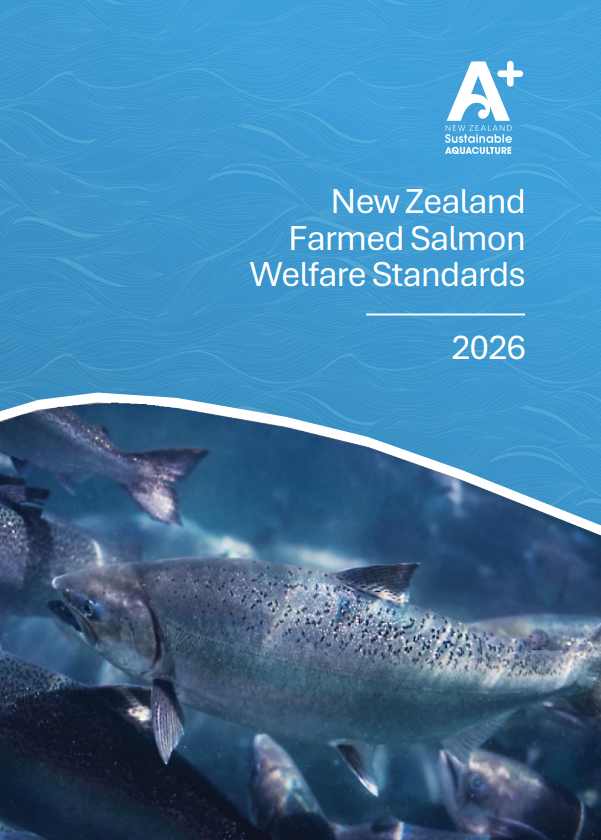
The A+ New Zealand Farmed Salmon Welfare Standards have been developed by members of the New Zealand Salmon Farmers Association (NZSFA) Fish Welfare Working Group. The Standards are reviewed biannually to ensure they stay relevant and reflect best international practice. The 2025 review was ratified by the New Zealand Association in August 2026. The Standards are based on New Zealand legislation, informed by the World Organisation for Animal Health for farmed fish and reflect international animal welfare policy, science and veterinary advice.
Through the implementation of the A+ Farmed Salmon Welfare Standards New Zealand King salmon famers seek to maintain the welfare status of farmed salmon across New Zealand to international standards while reflecting practical farming experience, and manage salmon welfare transparently and consistently at hatcheries, fish in transit, on freshwater and ocean farms and during harvesting.
Biosecurity Standards
All members of the New Zealand Salmon Farmers Association recognise that biosecurity is critical to maintaining both the welfare of the fish in our care, and the health of natural ecosystems. By managing biosecurity pathways within our control, we can help to safeguard the industry and the environment in which we farm.
To help that, we have developed industry Salmon Biosecurity Standards. These standards aim to reduce biosecurity risk by setting a high standard of operation for our industry.

Industry Standards